 Reviews

 Proudly American

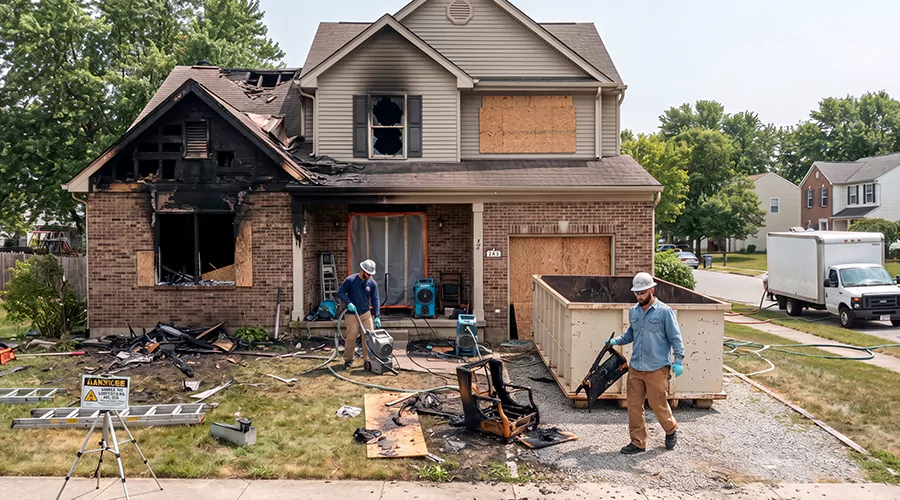
The fire damage restoration cost averages about $27,477 in 2026, with many projects ranging from $3,083 to $52,031. Minor smoke cleanup can start near $800 while severe structural losses can reach $180,000. Standard restoration commonly costs about $4 to $7 per square foot.
The price range is wide because a small kitchen fire is very different from a fire that damages several rooms. Smoke can travel well beyond the burned area while firefighting water can create a separate drying problem.
Cost guides also measure restoration differently. One current source places many standard projects around $8,000 to $18,000 while broader datasets that include more serious repairs show much higher totals.
What Does Fire Damage Restoration Usually Include?
Fire restoration covers more than replacing visibly burned materials. A typical project can involve assessing the affected area before removing debris. Smoke residue and water damage may also need attention before repairs begin. The exact scope depends on what the fire affected and how it was extinguished.
Common restoration stages include:
- Property damage assessment
- Emergency securing of openings
- Water extraction
- Structural drying
- Debris removal
- Soot cleaning
- Smoke residue removal
- Odor treatment
- Cleaning salvageable contents
- Removing damaged building materials
- Repairing affected surfaces
- Rebuilding damaged sections
The IICRC S700 standard addresses assessment of fire residues and odors throughout buildings. It also covers restoration cleaning of affected building systems and contents.
A project described as fire damage restoration may therefore contain several separate cost categories. Reading the scope of work is more useful than comparing only the total price.
How Much Does Fire Damage Restoration Cost in 2026?
Current 2026 pricing puts most projects between about $3,083 and $52,031 with an average near $27,477. Another national cost guide reports $8,000 to $18,000 for many standard restoration projects. Both report a common rate of about $4 to $7 per square foot.
A practical planning table looks like this:
| Damage Level | Typical Cost Range |
|---|---|
| Minor smoke problem | $800 to $3,000 |
| Limited room damage | $3,000 to $8,000 |
| Moderate multi-room damage | $8,000 to $20,000 |
| Significant restoration | $20,000 to $50,000+ |
| Severe structural loss | Up to $180,000 |
These ranges shouldn't be treated as fixed quotes. The same size home can produce very different totals depending on how far smoke traveled.
The fire restoration cost can also increase when firefighting water reaches flooring or wall cavities. Structural repairs create another major jump.
How Much Does Restoration Cost per Square Foot?
Fire restoration commonly costs about $4 to $7 per square foot in 2026. The average is approximately $5.50 per square foot in one current national dataset. This square-foot calculation works best as a starting estimate because smoke and water don't always remain inside the visibly burned area.
Typical estimates are:
| Affected Area | Approximate Cost at $4 to $7 Per Sq. Ft. |
|---|---|
| 500 sq. ft. | $2,000 to $3,500 |
| 1,000 sq. ft. | $4,000 to $7,000 |
| 1,500 sq. ft. | $6,000 to $10,500 |
| 2,000 sq. ft. | $8,000 to $14,000 |
| 2,500 sq. ft. | $10,000 to $17,500 |
| 3,000 sq. ft. | $12,000 to $21,000 |
| 4,000 sq. ft. | $16,000 to $28,000 |
These figures represent basic restoration planning rather than a structural rebuilding quote.
A 2,000-square-foot house does not automatically require restoration across all 2,000 square feet. Smoke residue may affect a larger area than direct flames while structural damage may remain concentrated in one section.
How Much Does Each Type of Fire Damage Cost?
Different types of damage create separate restoration expenses. Water removal can cost thousands of dollars even when flames affected only one room. Soot creates another cleaning stage because residue can settle on walls or contents far beyond the original fire area.
Current 2026 ranges include:
| Type of Damage | Typical Cost |
|---|---|
| Water damage cleanup | $1,000 to $6,000 |
| Soot removal | $2,000 to $6,000 |
| Smoke treatment | $200 to $1,200 per room |
| Air duct cleaning | $250 to $500 |
| Furniture deodorizing | $200 to $1,000 |
| Thermal fogging | $200 to $600 |
These figures come from a broad national 2026 cost dataset.
The fire damage cleanup cost rises quickly when several categories apply to the same property. A kitchen fire may require soot cleaning even when the wall repair itself is relatively small.
How Much Does Smoke and Soot Damage Add?
Smoke can create a large cleanup bill because particles travel through air currents before settling on surfaces. Current estimates place soot removal around $2,000 to $6,000. Smoke treatment can range from about $200 to $1,200 per affected room depending on the method and severity.
The smoke remediation cost depends heavily on how widely residue traveled.
Common affected areas include:
- Ceilings
- Painted walls
- Cabinet surfaces
- Upholstery
- Clothing
- HVAC registers
- Attic insulation
The smoke damage restoration cost can rise when residue enters porous contents that need specialized cleaning.
FEMA guidance also warns against running the HVAC air handler before bulk soot and ash have been removed because airflow can spread particles into cleaned areas.
Smoke damage cleanup cost is therefore influenced by distribution rather than only the room where flames were visible.
How Much Does Firefighting Water Add to the Bill?
Water damage following a fire commonly adds about $1,000 to $6,000 to the restoration project. Fire hoses or automatic sprinklers can saturate flooring and walls during suppression. The structure then needs extraction and drying before fire-related repairs can safely continue.
Water can affect:
- Carpet padding
- Hardwood flooring
- Drywall
- Wall insulation
- Subflooring
- Cabinets
- Ceiling materials
Water fire damage restoration can therefore become necessary even when plumbing wasn't responsible for the original event.
This secondary damage is easy to underestimate. The room may contain relatively little direct flame damage while several hundred square feet require drying because water traveled across the floor.
How Much Can Structural Fire Damage Cost?
Structural damage creates the largest restoration bills because cleaning alone cannot return damaged framing to service. Current national data shows severe projects can reach $180,000 when a large portion of the building has been structurally damaged. Major repair costs depend on which building systems must be replaced.
Fire damage reconstruction can involve:
- Framing repair
- Drywall replacement
- Roofing work
- Electrical replacement
- Floor repair
- Foundation work
- Door replacement
- Window replacement
The fire damage repair cost increases sharply once structural framing is involved.
Charred surface material doesn't always reveal the full extent of damage. Heat can affect connections or concealed building components that aren't visible during a quick walkthrough.
What Factors Have the Biggest Effect on the Final Price?
The main cost drivers are the amount of damaged material and how widely smoke spread. Water damage can add another major expense. Accessibility also matters because attics or crawl spaces require more labor than an open room.
Major price factors include:
- Total affected square footage
- Severity of flame damage
- Amount of soot contamination
- Number of smoke-affected rooms
- Water used during suppression
- Structural damage
- Contents requiring cleaning
- Accessibility
- Required reconstruction
- Local labor rates
Labor can account for about 50% to 70% of the total on many projects. Minor smoke or deodorization work can be even more labor-heavy because there may be little material to replace.
Residential fire damage restoration often costs more than the visible burn area suggests because odor or soot can affect areas that never touched the flames.
How Does Fire Damage Cost Progress Over Time?
Fire damage costs can grow after the flames are out because soot and water remain active problems. Standing water can spread into adjacent materials, making water damage restoration important while smoke residue continues contaminating surfaces. The initial assessment therefore needs to account for secondary damage before rebuilding starts.
A typical progression looks like this:
| Stage | Typical Condition | Possible Cost Level |
|---|---|---|
| Minor | Limited smoke with little physical damage | $800 to $3,000 |
| Moderate | One or more rooms need cleaning | $3,000 to $8,000 |
| Significant | Smoke plus material removal | $8,000 to $20,000 |
| Major | Multiple rooms require rebuilding | $20,000 to $50,000+ |
| Severe | Structural rebuilding is required | Up to $180,000 |
A fire damage clean up project can therefore become more expensive after walls are opened and concealed damage is found.
Water is another time-sensitive factor. Drying should begin promptly when firefighting water has saturated materials because prolonged moisture can increase later removal needs.
How Long Does Fire Restoration Take?
Fire restoration takes about four months on average according to current 2026 project data. Small losses can take only a few weeks while significant structural work can extend toward 12 months. Insurance approvals and construction schedules can also affect the total timeline.
A rough timeline is:
| Project Level | Typical Time |
|---|---|
| Minor smoke cleanup | Several days to 2 weeks |
| Limited repair | 2 to 6 weeks |
| Moderate restoration | 1 to 4 months |
| Major rebuilding | 4 to 12 months |
The schedule doesn't always match the cost exactly. A smaller insurance claim can still take time if specialty materials need to be ordered.
Emergency fire restoration usually begins with stabilization rather than complete reconstruction. Repairs follow once the property has been assessed and cleaned.
Is Restoration Cheaper Than Rebuilding?
Restoration is usually cheaper when significant portions of the home remain usable. Rebuilding becomes more likely when structural components have lost their integrity. The financial decision should compare the cost of saving sound materials against removing them and rebuilding the affected section.
A current cost dataset shows that major fire losses can reach about $180,000. Standard restoration projects usually remain far below that level.
The cost difference depends on what can safely remain. Cleaning a smoke-stained wall is different from replacing damaged framing behind it.
Fire remediation cost estimates should therefore state whether reconstruction is included. Otherwise two quotes can look very different while actually covering different stages.
Does Homeowners Insurance Cover Fire Restoration?
Homeowners insurance commonly covers accidental fire damage when the event falls within the policy's covered causes. The amount you receive still depends on the policy limits and deductible. Coverage for belongings can also be handled differently from coverage for the building itself.
The American Red Cross advises contacting the insurer after the property is safe to approach. It also recommends documenting damaged property before discarding items and saving receipts related to the fire loss.
Useful claim documentation can include:
- Photos of affected rooms
- Photos of damaged belongings
- An inventory of lost items
- Cleanup invoices
- Temporary housing receipts
- Repair estimates
Do not assume every upgrade made during reconstruction will be covered. Changes beyond restoring the previous condition can create out-of-pocket costs depending on the policy.
What Can You Safely Check Yourself?
You can document visible damage without touching soot or disturbing unstable materials after authorities have cleared the home for entry. Start outside and record damaged windows or roof areas. Photograph interior conditions only from areas that have been declared safe.
The American Red Cross says not to enter a fire-damaged home until local fire authorities say it is safe. It also advises watching for damaged gas lines or foundation problems before entry.
Once entry is permitted you can document:
- Rooms with visible smoke staining.
- Areas with water on the floor.
- Damaged flooring.
- Burned cabinets or finishes.
- Soot around vents.
- Visible ceiling damage.
- Damaged contents.
- Persistent odor in separate rooms.
Don't force open a jammed door after a serious fire. The Red Cross notes that a stuck door can sometimes be providing support to a damaged structure.
What Warning Signs Usually Mean the Cost Will Be Higher?
Higher bills are likely when damage extends beyond surface cleaning into structural repair. Smoke inside an HVAC system can increase the affected area. Firefighting water in several rooms can also raise costs even when flame damage remains localized.
Watch for these 10 signs:
- Several rooms have heavy soot deposits.
- Smoke odor remains throughout the home.
- Water has saturated flooring.
- Ceiling materials are sagging.
- Structural wood is visibly charred.
- Windows have failed from heat.
- HVAC components contain residue.
- Electrical wiring was damaged.
- Roof framing was affected.
- Multiple rooms require demolition.
Soot removal services can become a substantial part of the estimate when residue covers a wide surface area.
Fire and smoke damage restoration also becomes more involved when residue reaches contents throughout the building.
When Should You Call a Professional?
Professional assessment is appropriate after a significant house fire because structural conditions and hidden smoke contamination cannot always be judged visually. Firefighting water can also remain inside building cavities. Any damaged electrical system or structural framing should be evaluated before normal occupancy resumes.
Seek professional assessment when:
- Authorities report structural damage.
- Framing has been burned.
- The roof was affected.
- Electrical components were exposed to fire.
- Several rooms contain heavy soot.
- Water entered walls or flooring.
- Smoke entered the HVAC system.
- Persistent odor remains after surface cleaning.
- Major demolition appears necessary.
- The full affected area is unclear.
A restoration assessment should define what can be cleaned and what needs replacement.
The scope should also separate cleaning from reconstruction. That makes estimates easier to compare and helps reveal which contractor is pricing each stage.
How Can You Reduce Future Fire Damage Risk?
Fire prevention costs far less than restoration after a major loss. Working smoke alarms provide early warning while routine maintenance can reduce common ignition risks. The Red Cross recommends installing alarms on every level and testing them every month.
Use a simple home fire-safety routine:
- Test smoke alarms every month.
- Replace failed alarm batteries promptly.
- Keep cooking areas clear of combustible items.
- Have damaged electrical wiring repaired.
- Keep portable heaters away from combustible materials.
- Maintain fireplaces and chimneys.
- Keep suitable fire extinguishers accessible.
- Practice a household escape plan.
Current 2026 pricing places basic smoke detectors around $20 to $65 each. Fire extinguishers commonly cost about $20 to $100 each.
Those costs are small compared with a restoration project that reaches tens of thousands of dollars.
Conclusion
Fire damage can cost a few thousand dollars to restore after a limited event or more than $50,000 when smoke and structural repairs spread through the property. Firefighting water can add another layer of damage. The safest estimate comes from defining the exact restoration scope before rebuilding begins. If the property has structural or electrical damage, have it evaluated after authorities clear the building for entry.
Frequently Asked Questions
How much does minor fire damage cost to repair?
A small smoke-related loss can start around $800. Costs rise when soot cleaning or material replacement is required.
How much does smoke removal cost after a fire?
Smoke treatment can cost about $200 to $1,200 per affected room. Soot removal can cost around $2,000 to $6,000 for larger projects.
Does fire restoration include water damage?
It can. Water extraction and structural drying may be part of the project when sprinklers or firefighting operations soaked the property.
Does the restoration estimate include rebuilding?
Not always. Some estimates cover cleaning and stabilization while structural reconstruction is priced separately. Ask for an itemized scope before comparing totals.
Why is fire restoration so expensive?
One event can damage the structure while spreading smoke into other rooms. Water used to extinguish the fire can create a separate drying problem.
Can smoke damage cost more than the burned area?
Yes. Smoke can travel into rooms that were never touched by flames. Cleaning a larger smoke-affected area can therefore add substantially to the final bill.